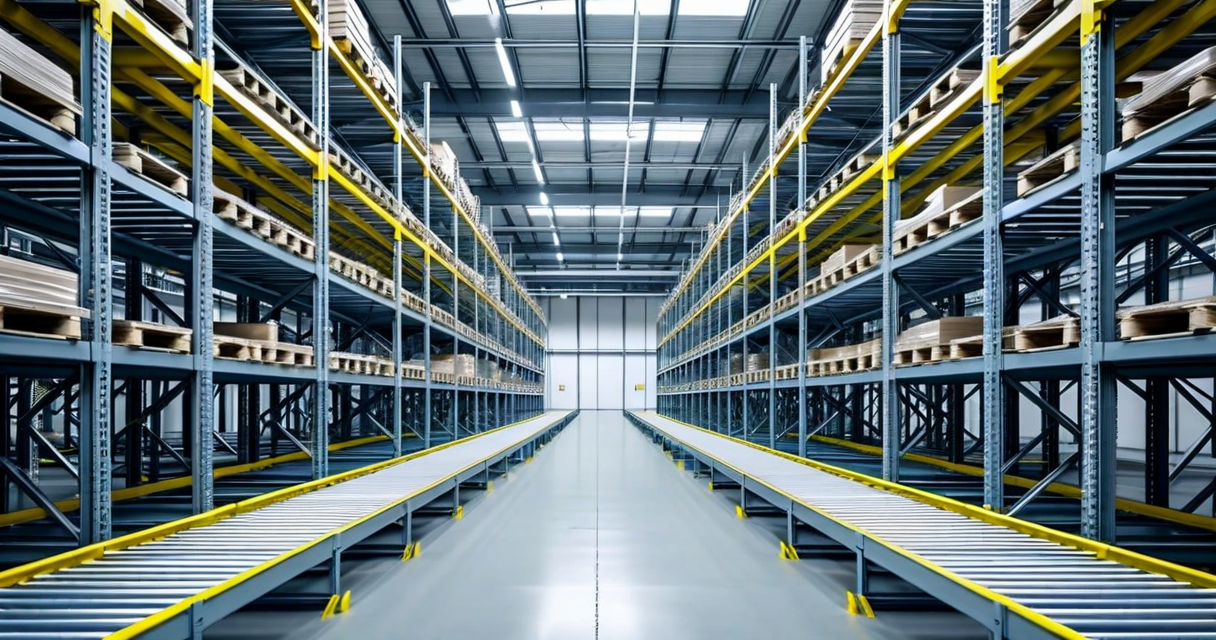
Global supply chains have faced extraordinary stress over the past several years. Port congestion, component shortages, labor instability, geopolitical disruptions, and the explosive growth of e-commerce have all converged to expose structural vulnerabilities in logistics and fulfillment operations that had been papered over during more stable periods. The response from enterprise operators has been telling: instead of waiting for conditions to normalize, the most forward-thinking companies have used these disruptions as the forcing function to accelerate investments in robotic automation that were already on their technology roadmaps.
At Gravis Robotics Capital, the supply chain and logistics automation sector is one of our highest-conviction areas of investment. The demand dynamics are compelling, the technology is maturing rapidly, and the capital efficiency story for operators who deploy robotic automation is becoming increasingly clear. This piece examines where the opportunity lies and what distinguishes the winning companies in this space.
The Scale of the Problem
To understand the opportunity in supply chain robotics, it helps to understand the scale of the problem being solved. The global warehousing and logistics sector employs tens of millions of workers worldwide. The United States alone has approximately 1.7 million warehouse workers, a number that has grown significantly with the rise of e-commerce but that is struggling to keep pace with the continued growth of online retail volumes.
The economics of large-scale fulfillment operations are largely determined by labor costs. For a major e-commerce fulfillment center, labor typically represents 60-70% of total operating costs. Picking — the process of retrieving individual items from storage and bringing them to packing stations — is the most labor-intensive step and the one with the greatest variability in efficiency. A skilled picker might fulfill 300-400 picks per hour; an average worker might manage 150-200. This variance, multiplied across thousands of workers in a single facility, creates enormous cost variability.
Robotic picking systems, once deployed, operate at consistent rates around the clock, do not require breaks, do not get injured, and do not resign to take a higher-paying job with a competitor. The fully-loaded cost comparison between human labor and robotic automation at scale is increasingly favorable for robotics, particularly in high-wage markets.
Autonomous Mobile Robots: The First Wave of Transformation
The most commercially mature segment of supply chain robotics is autonomous mobile robots (AMRs) — wheeled robots that navigate warehouse floors autonomously, carrying goods or totes between storage locations and picking or packing stations. AMRs represent a middle path between pure human labor and fully automated robotic picking systems. They do not replace human workers — they work alongside them, eliminating the time workers spend walking between storage locations (which in a large warehouse can represent 60-70% of a picker's shift).
The AMR business model has proven out across thousands of deployments globally. The technology is reliable enough for 24/7 industrial operation. The integration requirements are manageable. And the ROI story is clear and defensible: a deployment of AMRs typically pays back its capital cost in 18-24 months through labor savings and throughput improvements, after which the savings are nearly pure margin improvement.
AMR adoption is still in its early innings. The total installed base of warehouse AMRs worldwide represents a fraction of the addressable market. The companies that have established strong market positions in this segment — with differentiated fleet management software, strong reliability track records, and established enterprise customer relationships — are well-positioned for significant continued growth.
Robotic Picking: The Harder Problem
While AMR technology has achieved commercial maturity, robotic picking — the ability for a robot arm to reliably identify, grasp, and manipulate the enormous variety of objects found in a modern warehouse or fulfillment center — remains a frontier problem. The challenge is both technical and economic. Technical because the combination of object detection, grasp planning, and dexterous manipulation required to handle thousands of different SKUs reliably is genuinely hard. Economic because the per-pick cost of a robotic system must be competitive with human labor even as human labor costs continue to rise.
The field has advanced significantly in recent years. AI-powered vision systems can now identify and localize objects in cluttered bin environments with high accuracy. Soft robotic grippers with tactile sensing can handle a much wider range of object types — soft packages, irregular shapes, fragile items — than the rigid grippers of traditional industrial robots. And the learning systems that allow these robots to improve their performance on novel objects through experience are creating compound improvement curves that make the economics better with every passing month.
Several companies in this space are achieving commercially deployable reliability at above 95% pick success rates across large SKU catalogs. This is not yet the 99.9%+ reliability required to fully replace human pickers in every context, but it is good enough for high-volume, well-sorted applications and is improving steadily. We expect fully automated picking to be commercially viable for a significantly broader range of applications within the next three to five years.
Cold Chain and Specialty Environments
One of the most compelling near-term opportunities in supply chain robotics is the automation of cold chain logistics — the warehousing and distribution of temperature-sensitive goods like food, pharmaceuticals, and biologics. Cold chain environments present two powerful drivers for robotics adoption simultaneously: they are expensive for human workers to operate in (requiring protective gear and limiting shift lengths), and they benefit enormously from the consistent, reliable performance that robotic systems provide.
A robot that operates in a -20°C frozen food warehouse does not require heated workrooms, warm gear allowances, or reduced shift lengths. It can operate continuously in conditions that are impractical for extended human work. The ROI case for robotic automation in cold chain environments is often dramatically faster than in ambient temperature warehouses, and the reliability of cold chain supply is a critical priority for food safety and pharmaceutical integrity.
We have been particularly interested in companies building robotic systems specifically designed for cold chain environments — with cold-rated motors, lubricants, and electronics, and software designed for the specific workflows of frozen food and pharmaceutical distribution. This is a niche that has historically been underserved by the large general-purpose warehouse automation vendors, creating a clear opportunity for purpose-built solutions.
Last-Mile Delivery Robotics
Beyond warehouse automation, the last mile of delivery — the final leg from a local hub to the end customer — represents another category of supply chain robotics that is attracting significant investment and innovation. Sidewalk delivery robots, autonomous delivery vans, and drone delivery platforms all address the same fundamental challenge: last-mile delivery is the most expensive and labor-intensive portion of the e-commerce fulfillment chain, representing up to 40% of total delivery cost.
The commercial viability of last-mile robotics is more constrained than warehouse robotics by regulatory requirements, infrastructure readiness, and the technical challenges of autonomous navigation in complex urban environments. Sidewalk delivery robots have achieved commercial deployment in a small number of college campuses and suburban neighborhoods where the environment is relatively predictable and the regulatory environment is permissive. Drone delivery has demonstrated commercial viability in specific geography types — low-density suburban areas with good airspace access — but faces challenges in dense urban environments where the majority of high-value deliveries occur.
Our approach in this category is to focus on companies that are achieving genuine commercial traction in their target geography and use case, rather than those with technology demonstrations that look impressive but lack a credible near-term path to commercial deployment at scale. The last-mile category will ultimately represent one of the largest markets in supply chain robotics — but the timeline to mainstream deployment is longer than in the warehouse automation segment.
Key Takeaways
- Supply chain disruptions have accelerated enterprise adoption of robotic automation from "future initiative" to immediate operational priority.
- AMR technology has achieved commercial maturity with proven ROI and is in the early innings of broad market penetration.
- AI-powered robotic picking is approaching commercial viability across a growing range of SKU types and warehouse environments.
- Cold chain environments represent a particularly compelling near-term opportunity due to strong labor substitution economics.
- Last-mile delivery robotics is a long-term opportunity where commercial deployment timelines are longer but addressable market is enormous.
Conclusion
The disruption of global supply chains has, paradoxically, created one of the most compelling catalysts for robotic automation investment in the history of the industry. Enterprise buyers have been forced to confront their operational vulnerabilities and have emerged with a renewed commitment to building resilient, automated supply chains. The companies building the technology that enables this transformation are building some of the most valuable businesses in the logistics and industrial technology sectors. We are actively investing across this opportunity at Gravis Robotics Capital, with our $800K Seed Round specifically designed to back the most promising companies in this space from their earliest days. Reach out to us if you are building in supply chain or logistics automation.